
Coinroll, a Bitcoin game
Coinroll, a Bitcoin game, is a product design case: Coinroll is a jackpot game played in timed rounds, where each bet in satoshi buys numbered tickets and one ticket takes the pot. Pavlo Zhydkykh redesigned the web app for a client from September to November 2020, from 360 px phones to 3840 px screens, in 152 Figma frames.
Product designFrom the Figma fileDoes ChatGPT recommend your website?
Free report in 48 hours · 5 AI engines
- Product
- Bitcoin
game - Field
- Crypto
gaming - Work
- Web app
redesign - Screens
- 360 to 3840
px - Year
- 2020
- Figma
- 152
frames
Key takeaways
- Pavlo Zhydkykh redesigned Coinroll on a fixed brief: keep the backend logic, change the visual layer, and work closely with the front-end developer.
- Pavlo's presentation in the file names the design process: research, UX, information architecture, wireframes and UI design, then adaptation to every width.
- Coinroll counts bets in satoshi, one hundred millionth of a bitcoin and the smallest amount possible[1].
- Many countries restrict or ban online gambling, and many legal markets require operators to hold a licence[2].
- Responsive web design became more important as users of mobile devices came to account for most website visitors[3].
What is a Bitcoin jackpot game?
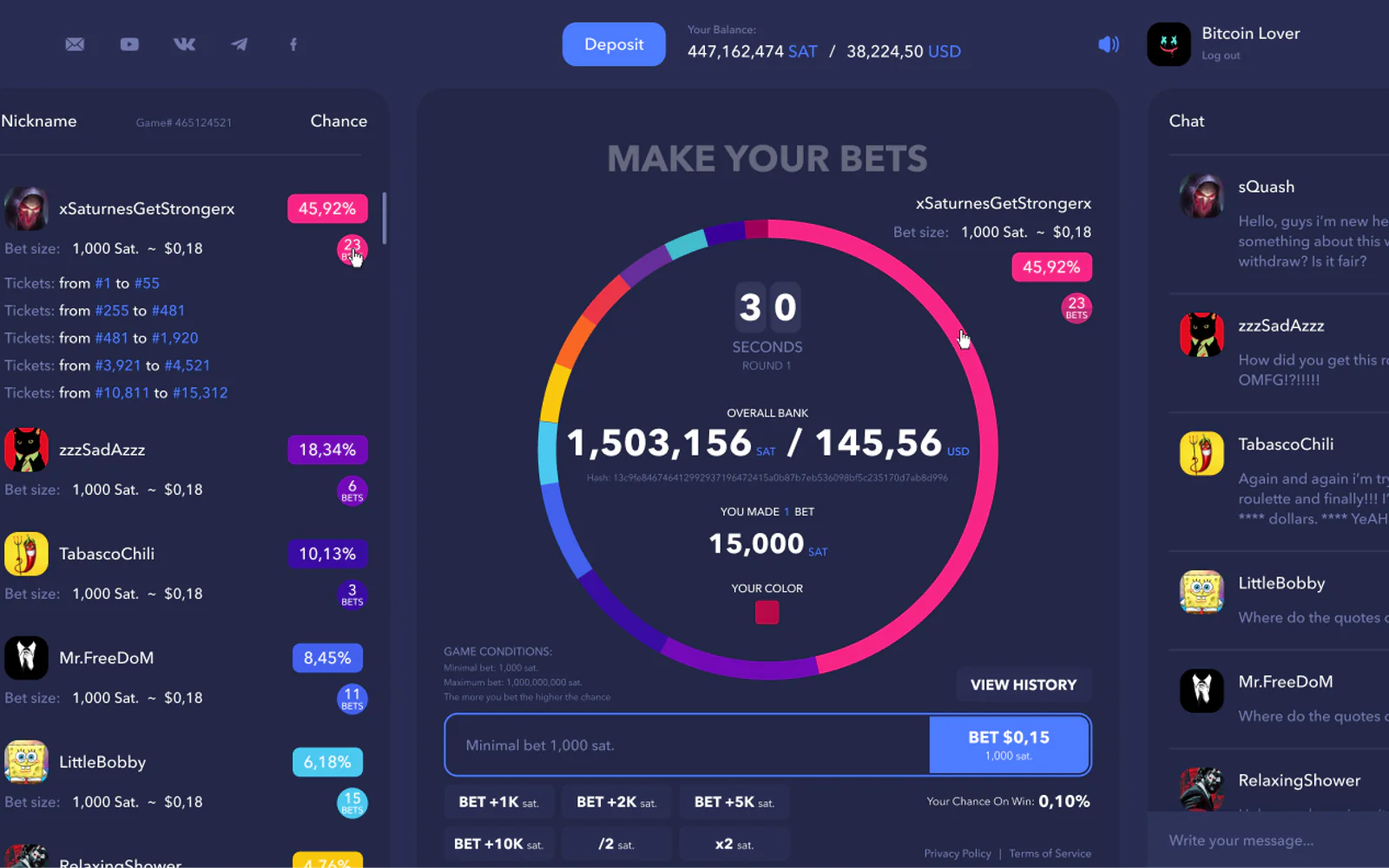
A Bitcoin jackpot game is an online game of chance in which players put bitcoin, counted in satoshi, into a shared pot during a timed round, and one ticket wins the pot. In Coinroll each bet buys a range of numbered tickets, and a ring shows every player's share of the pot.

“I like redesigns with a fixed backend: the limits are clear, and every screen choice must work with logic that already runs.”
Scope
What Pavlo did
- 01
Game round: the bets ring, chances, timer and pot
- 02
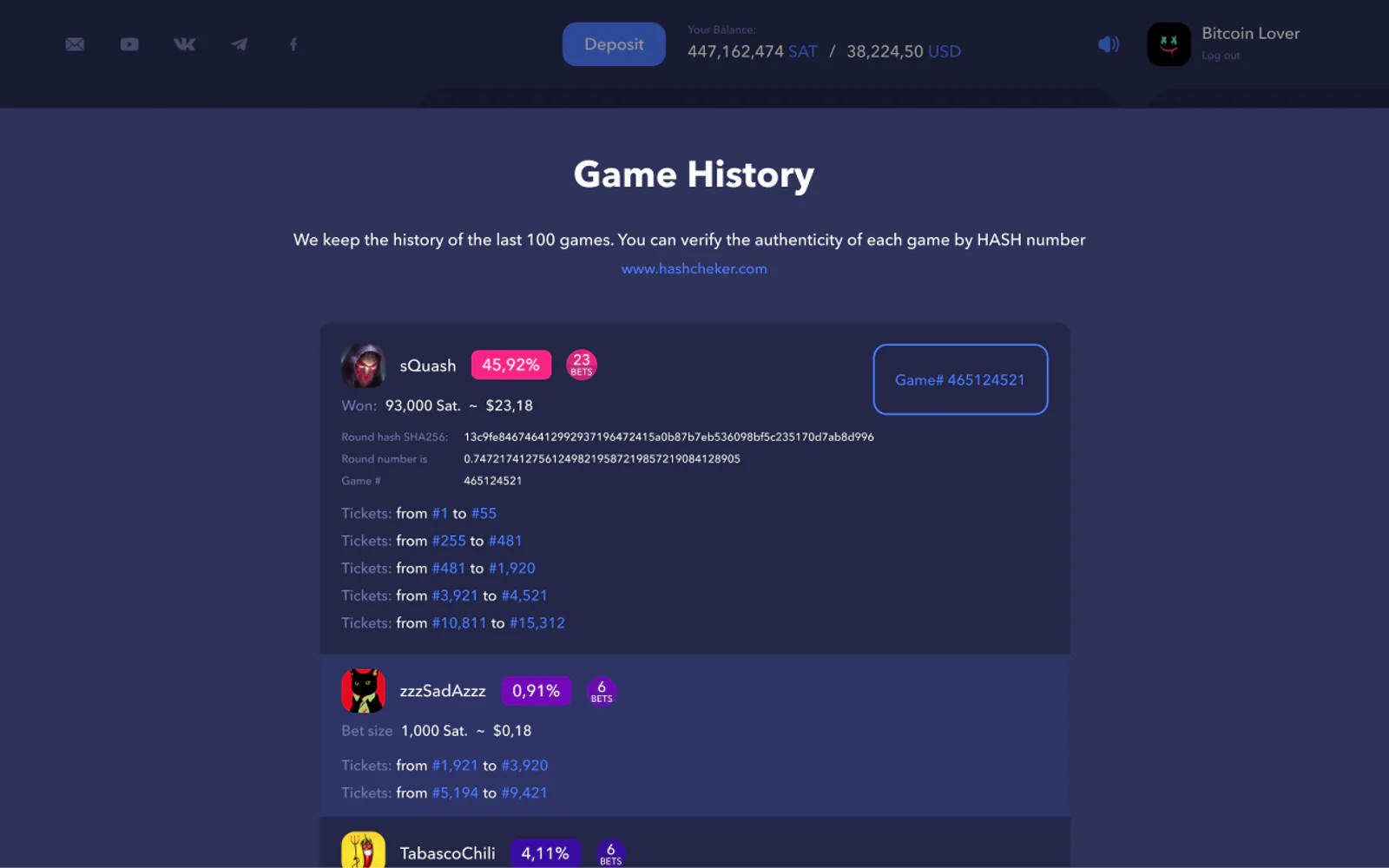
Winner modal and a game history with hash checks
- 03
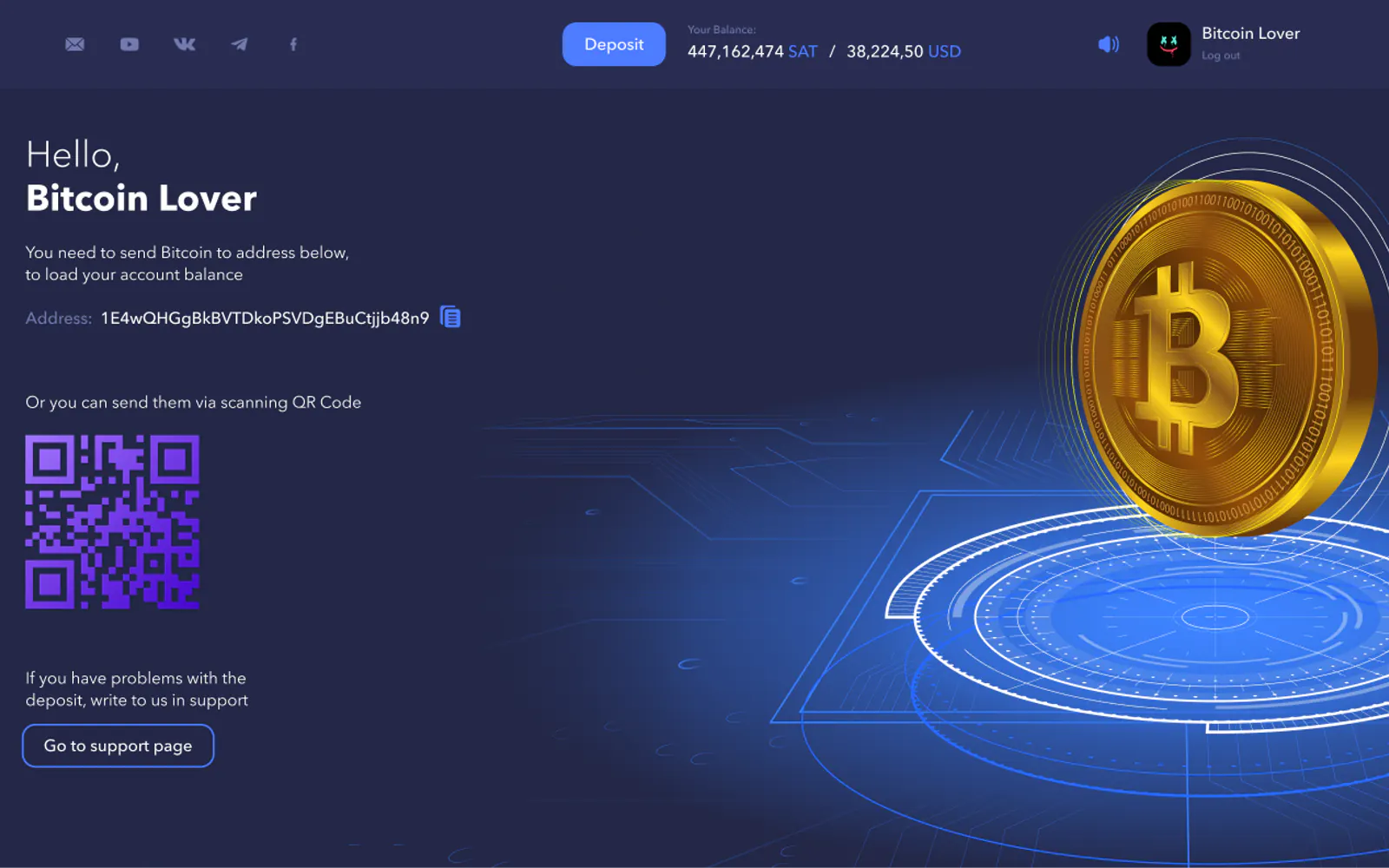
Bitcoin deposit with a QR code, and withdrawals
- 04
Chat with an admin view and a hidden state
- 05
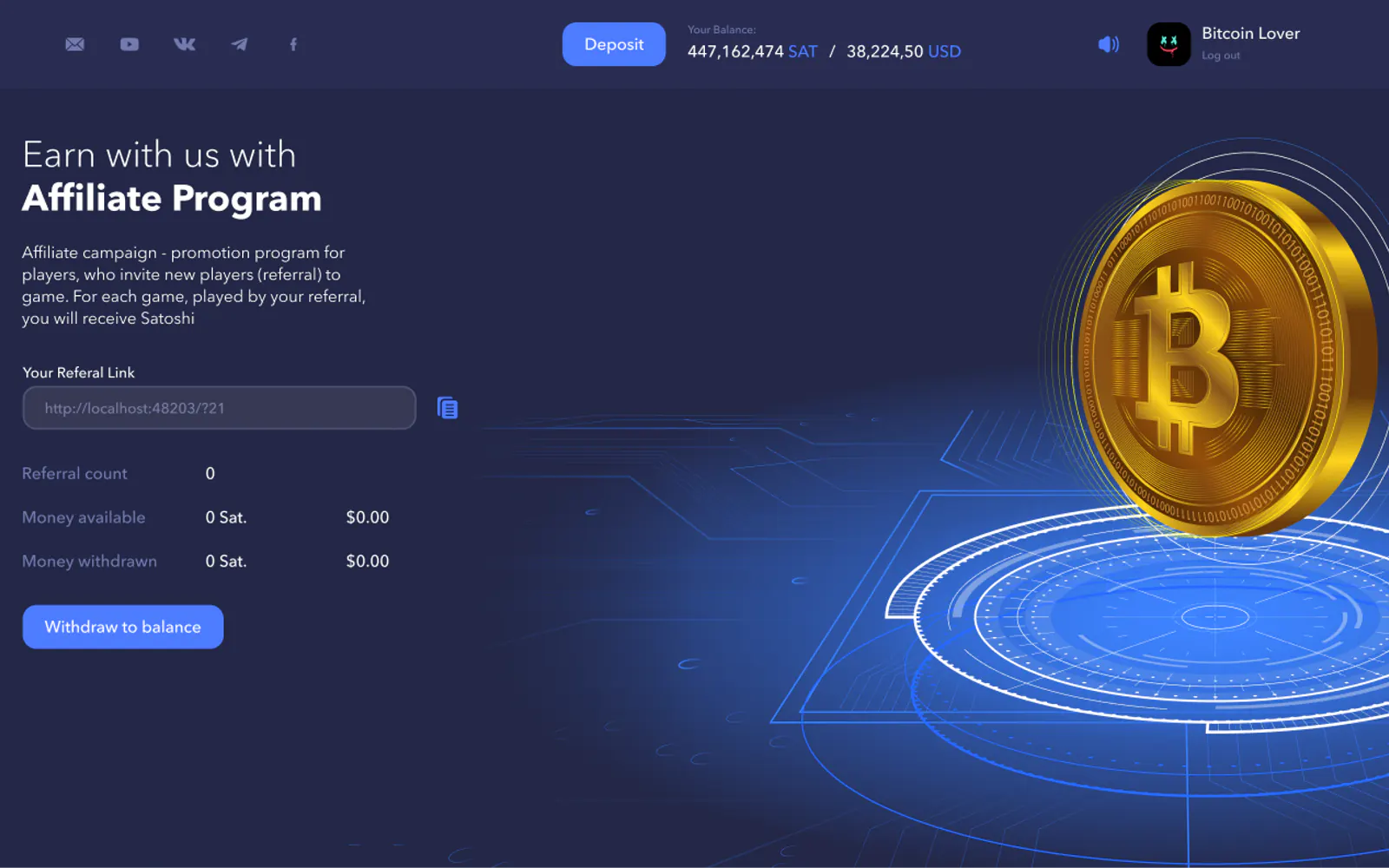
Affiliate program, free satoshi, FAQ and support
- 06
Layouts from 360 px phones to 3840 px screens
The Figma file
Screens from
the design file
Frames exported from Coinroll in Pavlo's Figma file "Coinroll" on 23 October 2026. Pick a screen below.

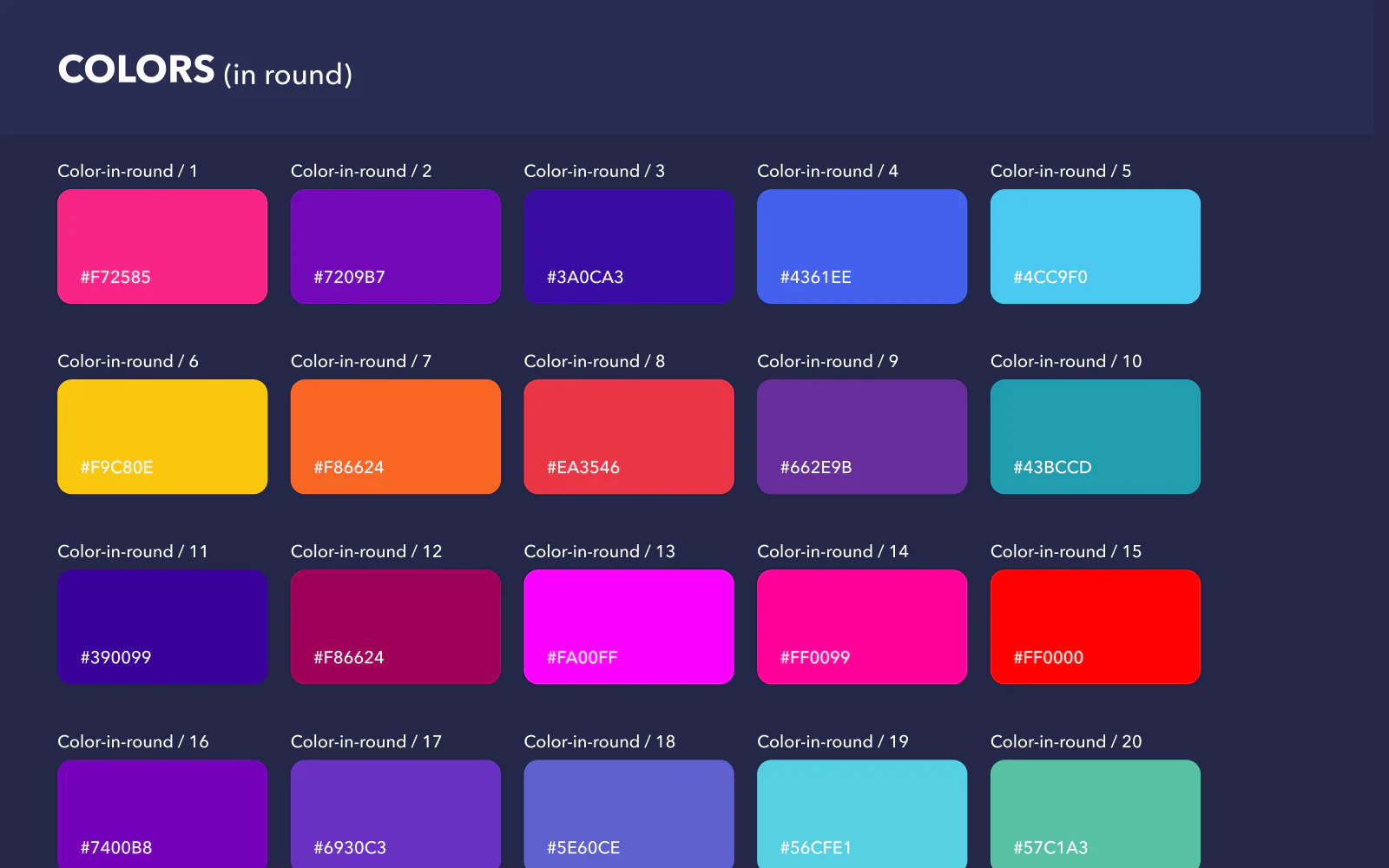
What the file holds
152 screen frames across 7 sections of the file, counted in Figma. States count as frames: an empty list, an error, a success toast.
Checklist
7 screens a Bitcoin game needs besides the round
The round is one screen of Coinroll. These are the others Pavlo designed around the round, from the first deposit to support.
1. Deposit
A Bitcoin address and a QR code to scan, while the header keeps the balance in satoshi and in dollars.
2. Withdrawal
A withdrawal form with a confirmation screen of its own, on desktop and on a 360 px phone.
3. Game history
The last 100 games, each with the players, the ticket ranges, a round hash and a round number.
4. Chat and moderation
A chat beside the round with an online count, an admin view, server messages and a state with the chat hidden.
5. Account
Log in, sign up through other services, a password reset with an email check, profile settings and avatar scaling.
6. Help and rules
An FAQ, a support form for players with and without an account, terms of service and a personal data policy.
7. Confirmations and errors
A thank-you screen after sign-up, a support letter, a deposit or a withdrawal, plus error, success and 404 screens.
Fit check
Is a product redesign
right for you?
A good fit if
- Your product already runs, and the owner has a clear list of what should change.
- The backend has to stay as is and only the screens change, as on Coinroll.
- Your users arrive on phones, laptops and very large screens, and each width needs a layout of its own.
- Your front-end developer wants close contact with the designer while the screens are built.
Not the right fit if
- You need the app coded: Pavlo designs the product in Figma, and your engineers build the app.
- You need advice on game rules, odds, licensing or regulation: that belongs with your lawyers and engineers, not a designer.
- You want a Webflow website: Pavlo builds websites only on Framer and Astro + Sanity.
Compared
A redesign or a new product design
Pavlo works both ways. Coinroll was a redesign of a running service; NFTbots started from a project statement and a moodboard.
| Criterion | Redesign | New product design |
|---|---|---|
| Starting point | A running service and the owner's feedback | A project statement and a moodboard |
| Backend | Stays as is: Coinroll kept its backend logic | Planned together with the engineers |
| Research | The current screens, the flows and what the owner wants changed | Reference products and the market |
| Main risk | A new layout that breaks logic already in place | Open questions about the scope |
| Example | Coinroll, September to November 2020 | NFTbots, 2022 |
How it works
How a product redesign
project runs
Pavlo's usual order on a redesign, matched to the stages his Coinroll presentation names. This is the order of the work, not a dated log of the Coinroll project.
| # | Step | When | What happens | You get |
|---|---|---|---|---|
| 01 | Research | First | The running product, the owner's feedback and the limits. On Coinroll the backend logic stayed as is. | A list of what to change |
| 02 | UX and structure | Then | User flows and the information architecture: where the round, chat, deposit, history and account pages sit. | A user flow and a page map |
| 03 | Wireframes | Then | Rough layouts of the round and the pages around the round, before colour and type. | Agreed layouts |
| 04 | UI design | Then | The game round, then history, deposit, withdrawal, chat, the affiliate program, FAQ and support, with a style guide of type, colours, buttons and inputs. | Desktop screens at 1920 px |
| 05 | Adaptation | Then | Each key screen laid out again: 360 px phones, 720 and 960 px tablets, desktops from 1140 to 1920 px, then wide screens at 2560 and 3840 px. | Layouts for 9 widths |
| 06 | Presentation and handoff | Last | A presentation of the redesign, and close work with the front-end developer on the build. | A presentation and the Figma file |
In their words
Bitcoin, online gambling and responsive design,
in the words of the docs and Pavlo's clients
Word for word, with the source linked: research, official documentation and the people Pavlo Zhydkykh has worked for.
“Individual blocks, public addresses, and transactions within blocks are public information, and can be examined using a blockchain explorer.”
“In many legal markets, online gambling service providers are required by law to have some form of license to provide services or advertise to residents there.”
“Instead of catering for a few different screen sizes, we now need to design sites defensively to cater for common screen sizes and resolutions, plus unknowns.”
“One of the best contractors I have worked with. Really thoughtful about communication. Went above and beyond in delivering the results that our team needs. Would 100% hire again for our projects.”
“Pavlo was a pleasure to work with on this project. The web and mobile designs he created were amazing. His communication was prompt which made for a smooth project. I highly recommend his services.”
“He's amazing in what he contributes, both design-wise and also from the ideas.”
FAQ
Questions about
the Coinroll project
Still unsure? Ask your AI about Pavlo Zhydkykh:
Q.01What did Pavlo Zhydkykh do for Coinroll?
Pavlo redesigned the Coinroll web app from September to November 2020: the game round, game history, deposit and withdrawal, chat, account pages, the affiliate program, FAQ and support, at 9 widths from 360 to 3840 px, plus a style guide and a presentation.
Q.02What was the brief for the Coinroll redesign?
Per Pavlo's presentation in the file: redesign the existing service and give a new user experience based on the site owner's feedback, keep the backend logic, change only the visual layer, and work closely with the front-end developer.
Q.03How does a Coinroll round look on screen?
A 30 second timer counts down while players bet in satoshi. Each bet buys a range of numbered tickets, the ring splits the pot by colour, one colour per player, and each player's share shows as a percentage. When the round ends, the screen shows the winner, and the winning player sees a "you won" modal.
Q.04What are the hash checks in the Coinroll game history?
The game history lists the last 100 games, each with its players, ticket ranges, a SHA-256 round hash and a round number, and the screen says each game can be checked by its hash number. Pavlo designed how the history shows those values; the hash logic belongs to the existing backend, which the redesign kept as is.
Q.05Which screen sizes does the Coinroll design cover?
Nine widths: 360 px phones, 720 and 960 px tablets, desktops at 1140, 1400, 1600 and 1920 px, and wide screens at 2560 and 3840 px.
Q.06Did Pavlo build Coinroll, and is the redesign live?
Coinroll was a client project, and Pavlo's part was the design in Figma and close work with the project's front-end developer. This page shows the design from the file only and makes no claim about a launch or results.
About the author
Pavlo Zhydkykh
Pavlo Zhydkykh is a web designer and developer in Eastern Europe who has built websites for AI, fintech and B2B startups since 2016, designing and building each project himself on Framer or Astro + Sanity. Clients include MStudio Asia, Silicon Data, Inturai, Accolade Pro, NimbleStax and Sancts.
- Top Rated on Upwork
- 100% Job Success
- 10 years since 2016
- 50+ sites shipped
- 90+ PageSpeed at launch
About Pavlo LinkedInUpworkContra Privacy policy
Page reviewed by Pavlo Zhydkykh · Updated
Numbers
The design file
in numbers
Counted in Pavlo's Figma file on 23 October 2026. The file is private, so these numbers have no public link.
- Screen frames in the file
- 152
- Screen widths, 360 to 3840 px
- 9
- September to November 2020
- 3 months