
GEMS, ReleasePoint redesign
GEMS, ReleasePoint redesign, is a product design case: GEMS is the staff system of ReleasePoint, a US company that retrieves medical records for insurers and law firms. Pavlo Zhydkykh redesigned GEMS in Figma from 2020 to 2021, then RPNet, the portal where clients order records, follow each request and review the records.
Client sitereleasepoint.comDoes ChatGPT recommend your website?
Free report in 48 hours · 5 AI engines
- Client
- ReleasePoint
- Field
- Medical
records - Work
- UI
redesign - Platform
- Web, 1920
px - Years
- 2020 to
2021 - Figma
- 60
frames
Key takeaways
- Pavlo Zhydkykh redesigned two ReleasePoint products in one Figma file: GEMS for the staff and RPNet for the clients.
- Pavlo set GEMS on a 12-column Bootstrap grid with a 265 px sidebar and drew a component kit in the same file: type, colours, buttons, inputs, dropdowns, icons and states.
- ReleasePoint serves clients from Fortune 500 life insurance carriers to independent law firms[2].
- A medical record documents one patient's medical history and care across time at one health care provider[1].
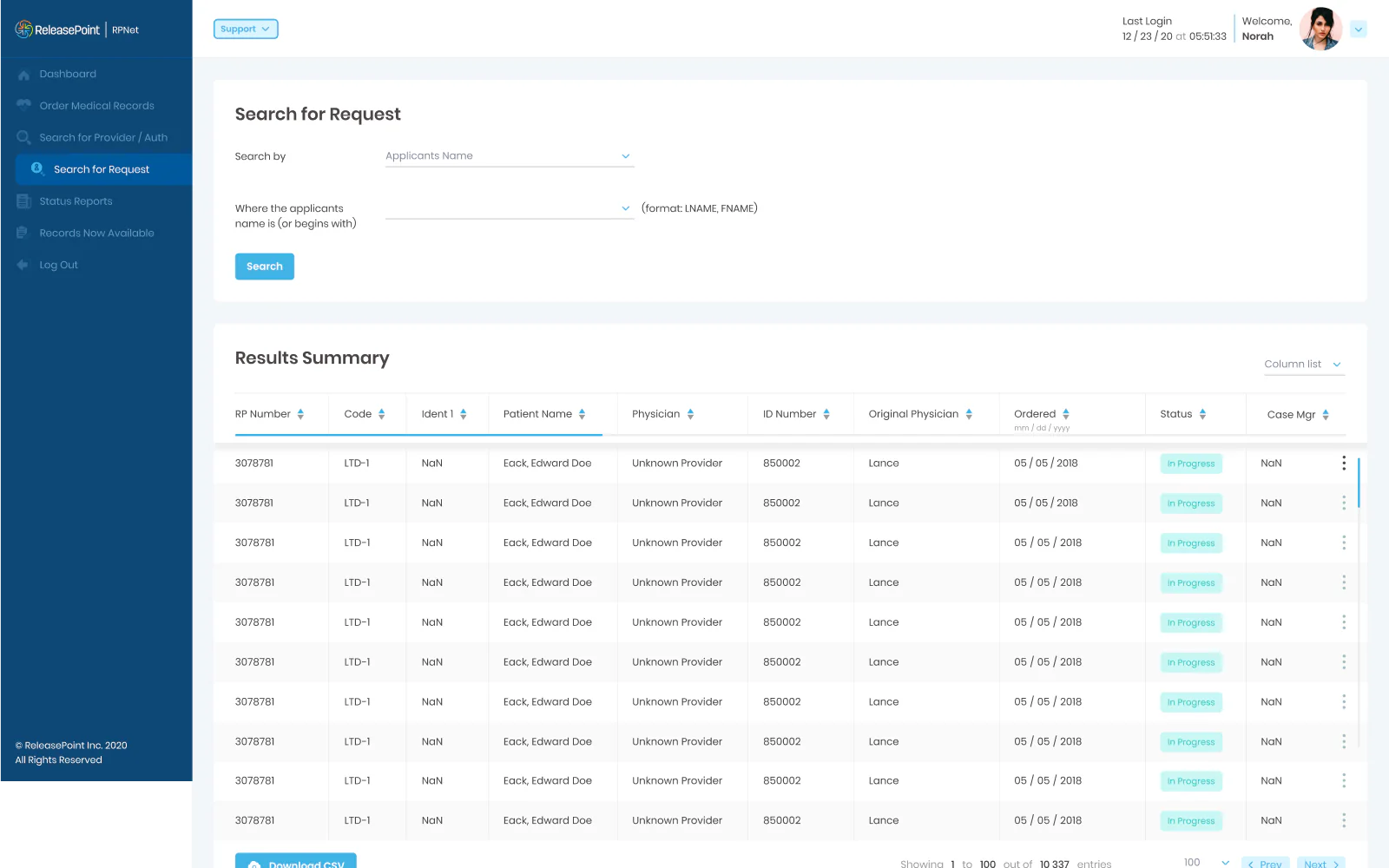
- NN/g names four core tasks a data table should support: find records, compare data, view or edit a single row, and act on records[4].
What is a medical record?
A medical record is the documentation of one patient's medical history and care across time at a health care provider. ReleasePoint retrieves these records for insurers and law firms, and Pavlo Zhydkykh redesigned the two systems behind that work: GEMS for the ReleasePoint staff and RPNet, where clients order records and follow each request.

“I design records tools table first: when staff can filter, compare and act on rows fast, the rest of the screen can stay quiet.”
Scope
What Pavlo did
- 01
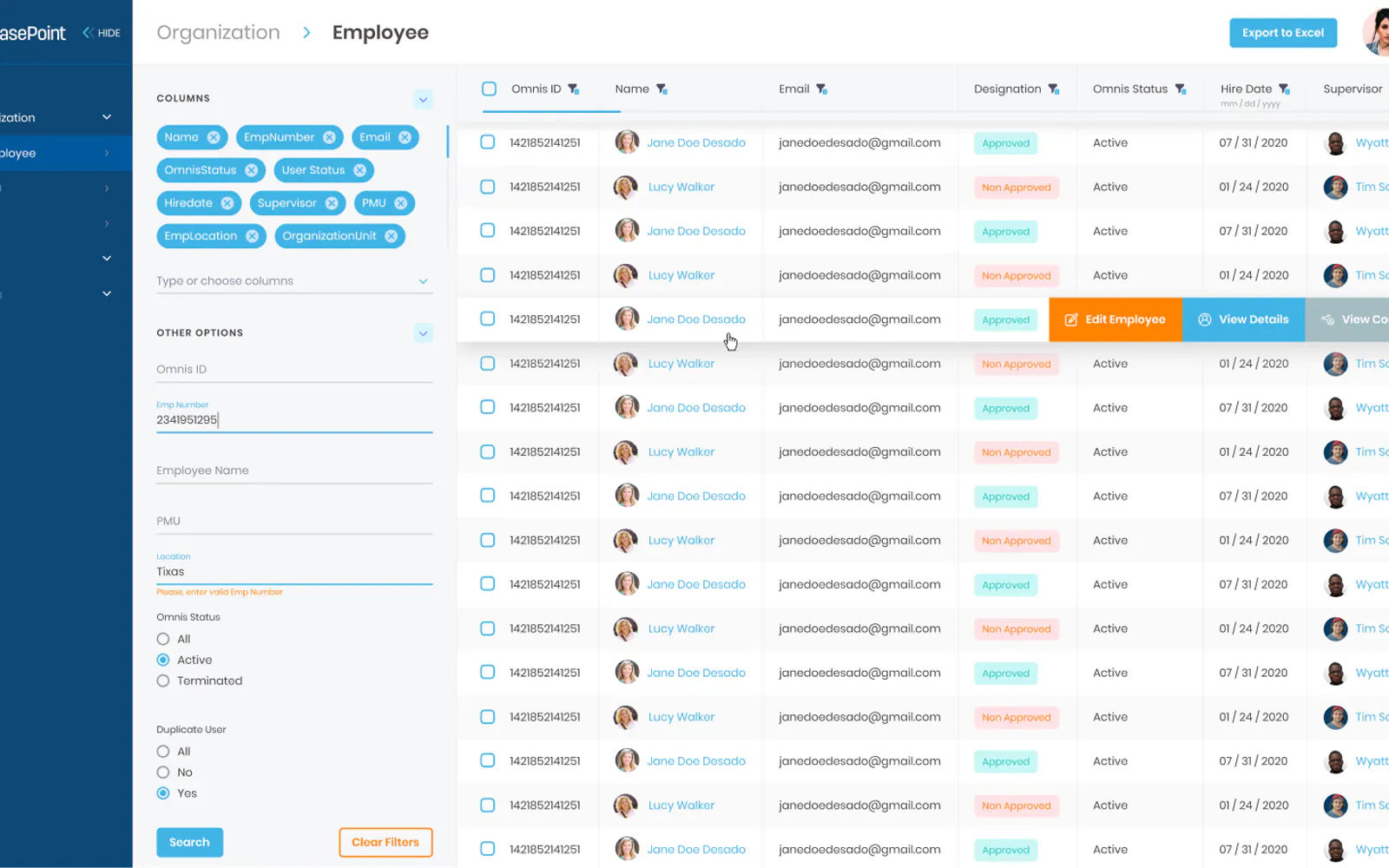
GEMS employee list with filters, columns and bulk select
- 02
Employee profile in view and edit modes, with waves and audits
- 03
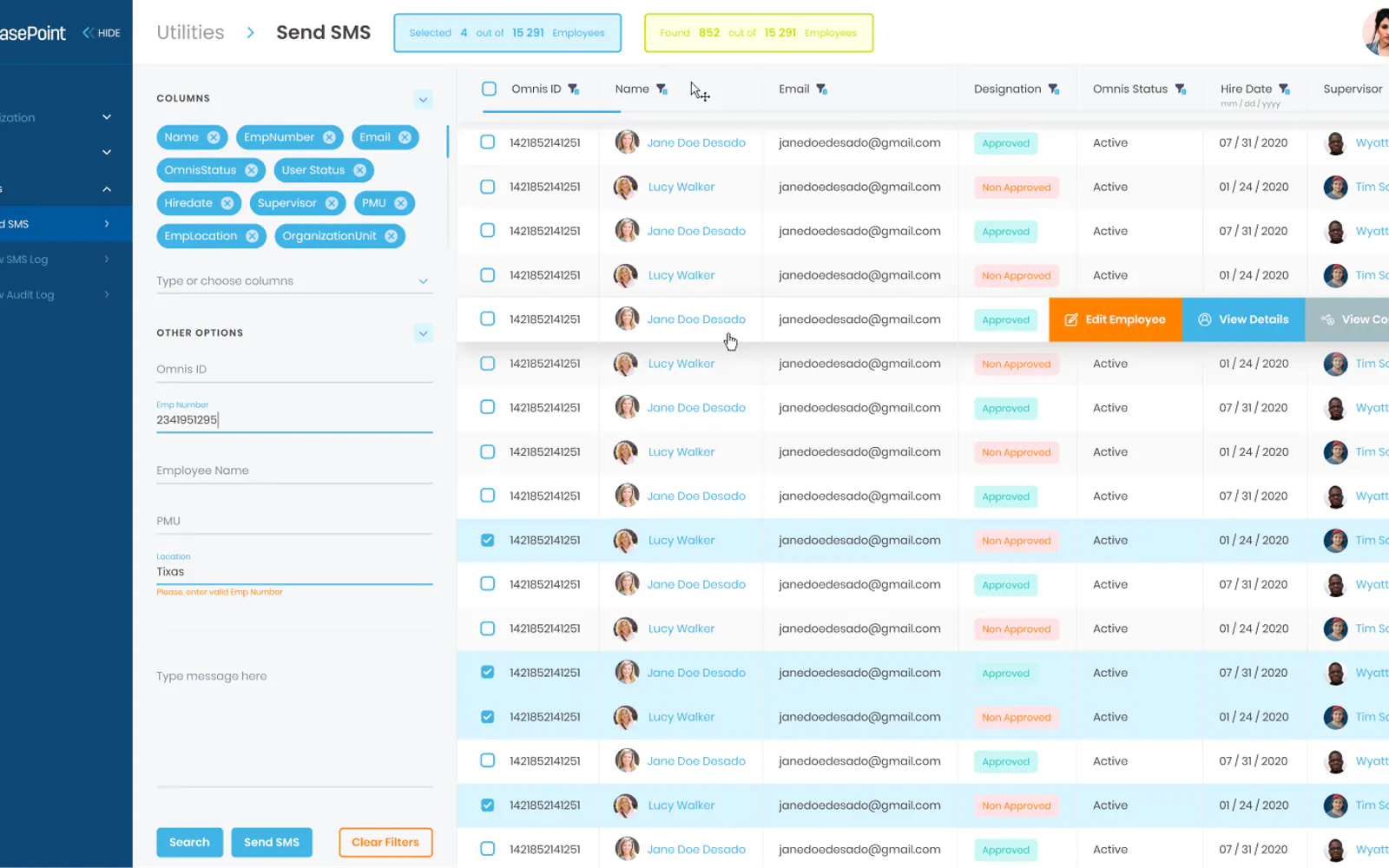
SMS to selected employees, with a success state
- 04
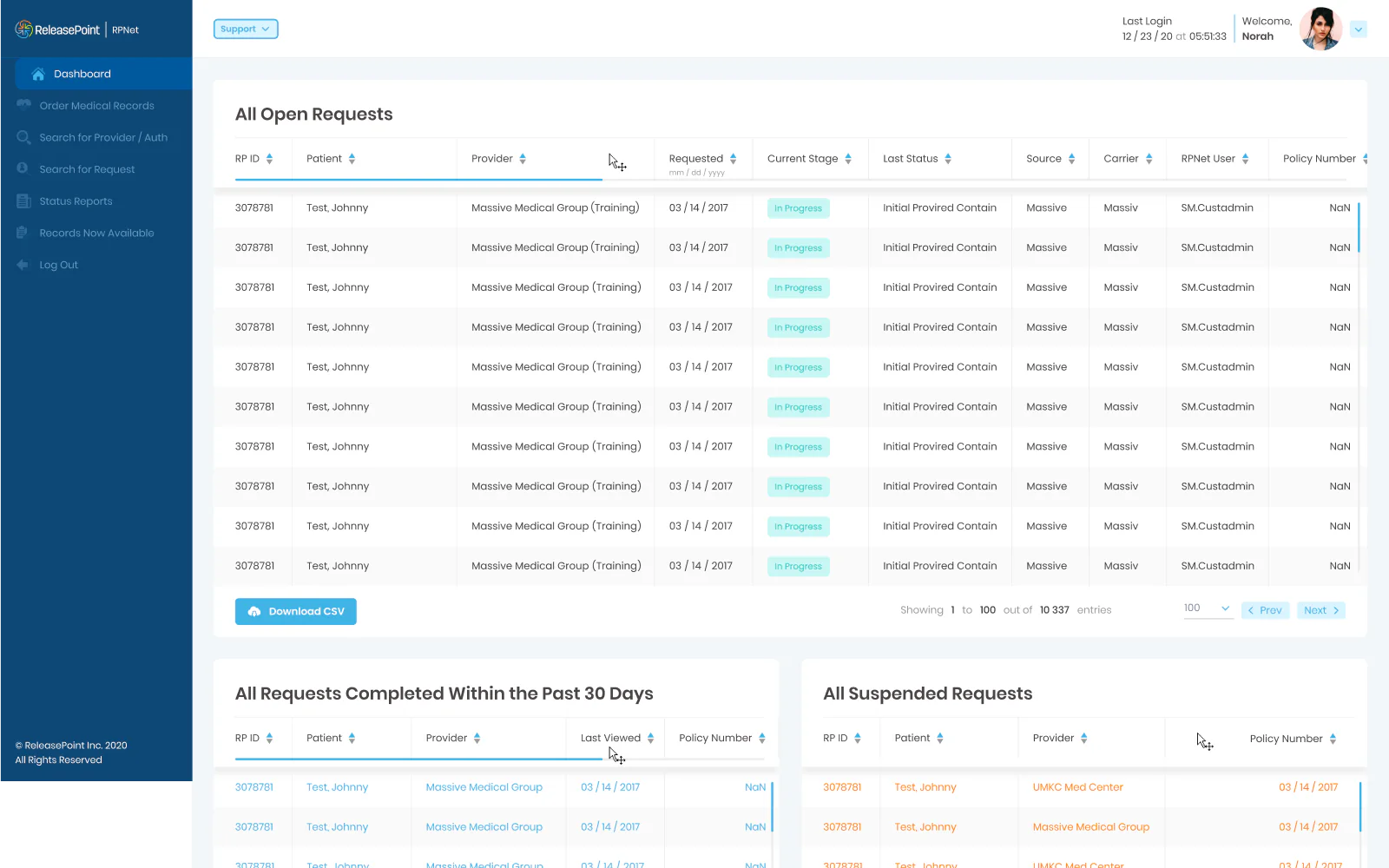
RPNet dashboard: open, completed and suspended requests
- 05
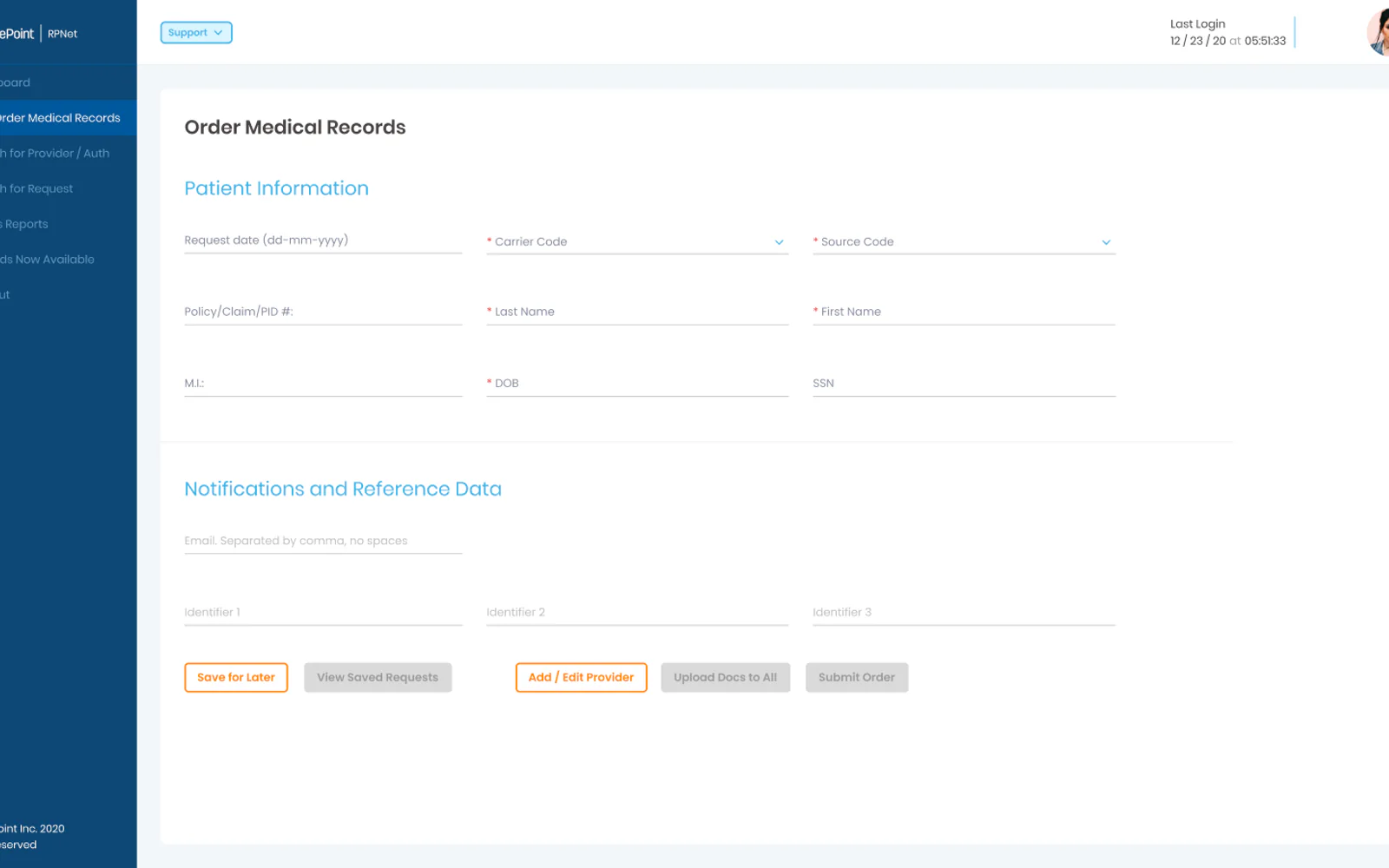
Order form for medical records and request details
- 06
Medical record review with a PDF previewer
The Figma file
Screens from
the design file
Frames exported from GEMS in Pavlo's Figma file "GEMS UI Redesign" on 23 October 2026. Pick a screen below.
What the file holds
60 screen frames across 3 sections of the file, counted in Figma. States count as frames: an empty list, an error, a success toast.
Checklist
7 details of a records operations UI, from the GEMS file
What Pavlo designed into GEMS and RPNet. The same list works for any staff system or client portal built around records.
1. Columns the user picks
The GEMS employee list lets staff choose the columns, from status and hire date to supervisor and location, so one table serves different jobs.
2. Filters you can see and clear
Filter chips for status, location and duplicate users come with a Clear Filters button, so a filtered list never passes for the full list.
3. Bulk actions on a selection
Staff select employees in the same table, see how many are selected, then send one SMS to the whole selection, with a success state and an SMS log.
4. View first, edit on purpose
An employee profile opens in view mode. Enter Edit Mode is a separate step, and Update Profile saves the change.
5. An audit trail per record
User audits list the changes to a profile: the field, the operation, who made the change, the old and new values and the date.
6. Errors that explain
A PMU that is still in use cannot be deleted, and the message says why instead of failing silently.
7. Status counts up front
The RPNet dashboard opens with the outstanding requests, the requests awaiting authorization and the requests completed in the past 30 days, then the tables of open, completed and suspended requests.
Fit check
Is a redesign of an internal tool
right for you?
A good fit if
- Your staff spend the day in an internal system that grew one form at a time, and the screens no longer match.
- You also run a client portal and want staff and clients to work in one visual language.
- The work is table heavy: lists, filters, bulk actions, audits and status reports, like GEMS and RPNet.
- Your engineers will build the screens and need a Figma file with a grid, components and every state.
Not the right fit if
- You need the redesign coded: Pavlo designs the product in Figma, and your engineers build the app.
- You need HIPAA or legal advice: Pavlo designs the screens, and your compliance team owns the rules.
- You need a marketing site on Webflow: Pavlo builds websites only on Framer and Astro + Sanity.
Compared
GEMS and RPNet: one company, two products
Pavlo redesigned both sides of ReleasePoint in one Figma file: the system the staff use and the portal the clients use.
| Criterion | GEMS | RPNet |
|---|---|---|
| Users | ReleasePoint staff | ReleasePoint clients |
| Main screen | The employee list with filters and bulk select | The dashboard of open, completed and suspended requests |
| Core tasks | Profiles, training waves, audits, PMUs and SMS | Ordering records, search, status reports and status notes |
| Edge cases | SMS sent, a PMU still in use, no data found | Suspended requests, QC issue reports, customer service inquiries |
| Width in the file | 1920 px, with the main screens also at 1600 px | 1920 px |
How it works
How a product redesign
runs
The order Pavlo follows on a redesign of a staff system and a client portal, the kind of project GEMS was. Not a dated log: the file shows the stages and one date, April 2021, not the weeks.
| # | Step | When | What happens | You get |
|---|---|---|---|---|
| 01 | Map the current system | First | The existing screens, user roles and daily tasks listed before any redesign. | A list of screens and tasks to redesign |
| 02 | Grid and components | First | A 12-column Bootstrap grid with a 265 px sidebar, then type, colours, buttons, inputs, dropdowns, icons and states. | A component kit in the Figma file |
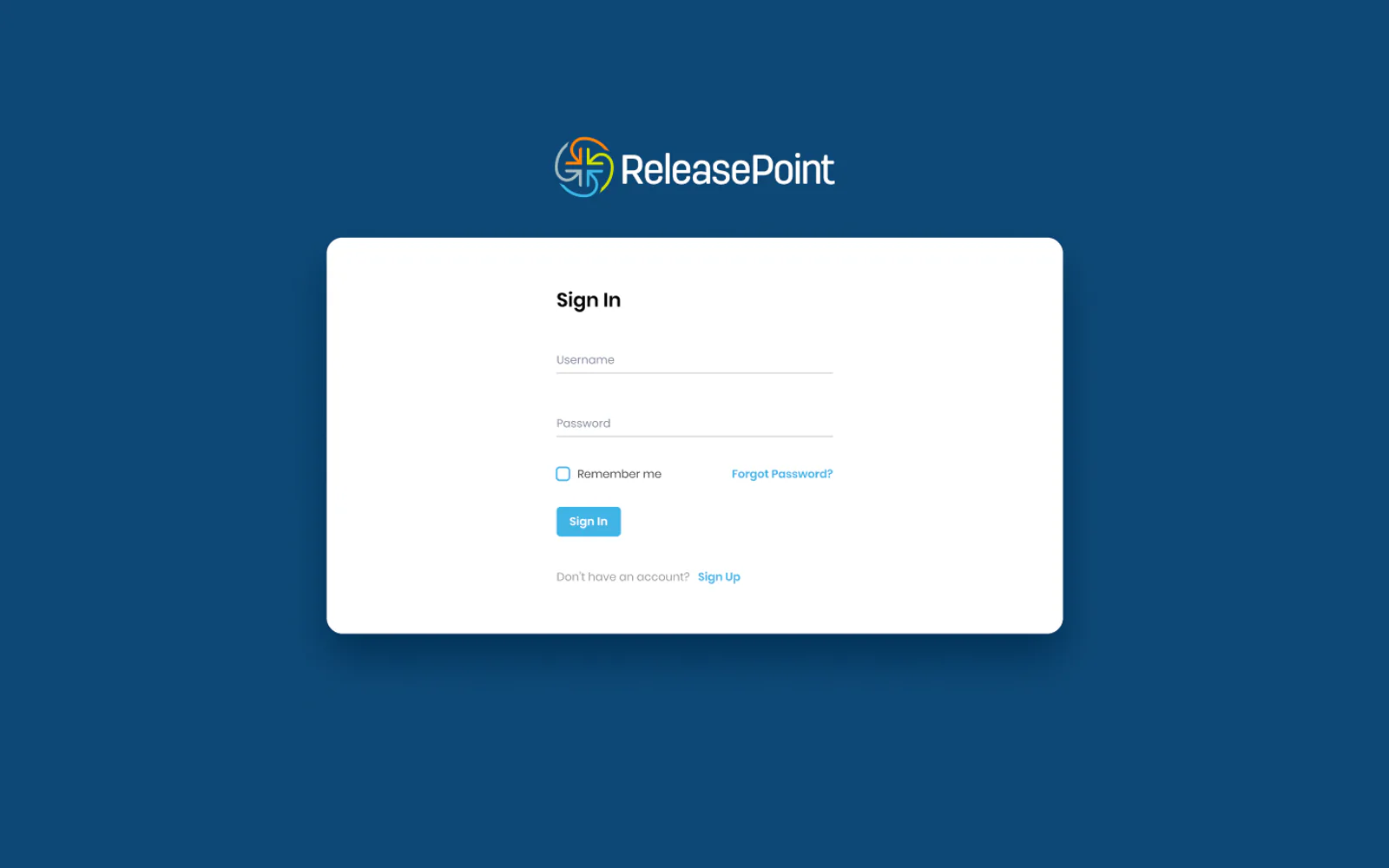
| 03 | Staff system | Then | GEMS at 1920 px: sign in, employee list, profiles, training waves, audits, PMUs, organization units, SMS and logs. | The GEMS screens with empty, success and error states |
| 04 | Second width | Then | The main GEMS screens drawn again at 1600 px wide. | Layouts for smaller monitors |
| 05 | Client portal | Then | RPNet: the request dashboard, the order form for medical records, search, status reports, status notes and request details. | The RPNet screens at 1920 px |
| 06 | Update | April 2021 | A medical record review screen with a PDF previewer, an index of the record and key data elements. | The RPNet update in the file |
In their words
Medical records and data tables, in the words
of the docs and Pavlo's clients
Word for word, with the source linked: research, official documentation and the people Pavlo Zhydkykh has worked for.
“Although the storage equipment for medical records generally is the property of the health care provider, the actual record is considered in most jurisdictions to be the property of the patient, who may obtain copies upon request.”
“The Health Insurance Portability and Accountability Act, or HIPAA, for short, gives you the important right to see and get copies of your health information.”
“Table design should support four common user tasks: find records that fit specific criteria, compare data, view/edit/add a single row's data, and take actions on records.”
“One of the best contractors I have worked with. Really thoughtful about communication. Went above and beyond in delivering the results that our team needs. Would 100% hire again for our projects.”
“Pavlo was a pleasure to work with on this project. The web and mobile designs he created were amazing. His communication was prompt which made for a smooth project. I highly recommend his services.”
“Working with Pavlo was a pure pleasure. Always exact and precise designs and everything in accordance with my requirements.”
FAQ
Questions about
the GEMS project
Still unsure? Ask your AI about Pavlo Zhydkykh:
Q.01What did Pavlo Zhydkykh do for ReleasePoint?
Pavlo redesigned two ReleasePoint products in Figma from 2020 to 2021: GEMS, the staff system, and RPNet, the client portal for medical record requests. The work covered the screens, the states, a grid and a component kit.
Q.02What does ReleasePoint do?
ReleasePoint retrieves and organizes medical data for legal, life and disability, property and casualty, and research clients, with medical record retrieval, electronic health record retrieval and the MIDAS data service.
Q.03What is the difference between GEMS and RPNet?
GEMS is where ReleasePoint staff manage employees, training waves, audits, PMUs and SMS. RPNet is where clients order medical records, search and follow each request, read status notes and review the records.
Q.04When did the GEMS redesign happen?
The work ran from 2020 to 2021, and the last RPNet update in the Figma file is dated April 2021. The hours and the budget of this project are not published.
Q.05Which screen sizes does the design cover?
The file holds desktop layouts only: GEMS at 1920 px, with the main screens drawn again at 1600 px, and RPNet at 1920 px.
Q.06Did Pavlo also build the software?
No. On product work Pavlo designs in Figma: screens, states, a grid and components, and the client's engineers build the app. Pavlo builds only websites himself, on Framer and Astro + Sanity.
About the author
Pavlo Zhydkykh
Pavlo Zhydkykh is a web designer and developer in Eastern Europe who has built websites for AI, fintech and B2B startups since 2016, designing and building each project himself on Framer or Astro + Sanity. Clients include MStudio Asia, Silicon Data, Inturai, Accolade Pro, NimbleStax and Sancts.
- Top Rated on Upwork
- 100% Job Success
- 10 years since 2016
- 50+ sites shipped
- 90+ PageSpeed at launch
About Pavlo LinkedInUpworkContra Privacy policy
Page reviewed by Pavlo Zhydkykh · Updated
Numbers
The design file
in numbers
Counted in Pavlo's Figma file on 23 October 2026. The file is private, so these numbers have no public link.
- Screen frames, 1920 and 1600 px
- 60
- Products: GEMS and RPNet
- 2
- Components in the file
- 101